“Flame of God” and “Hast Thou No Scar?” by Amy Carmichael (1867-1951): From four decades of active ministry in India to the last 20 spent on a sickbed “…and pierced are the feet that follow Me”
[Reading Time: 6 minutes]
Introduction and biographical notes
We present below two brief poems by Amy Carmichael, who spent 55 years of missionary service in South India—without, it should be noted, a single furlough.
Initially serving in Japan (1893-94) and Ceylon (Sri Lanka), she next traveled to South India in 1895, arriving at the age of 28. There she remained for the next six decades, never to return home to her native Belfast, never to marry, never to have children, but with a ministry that extended through India and later crossed oceans with her writings.
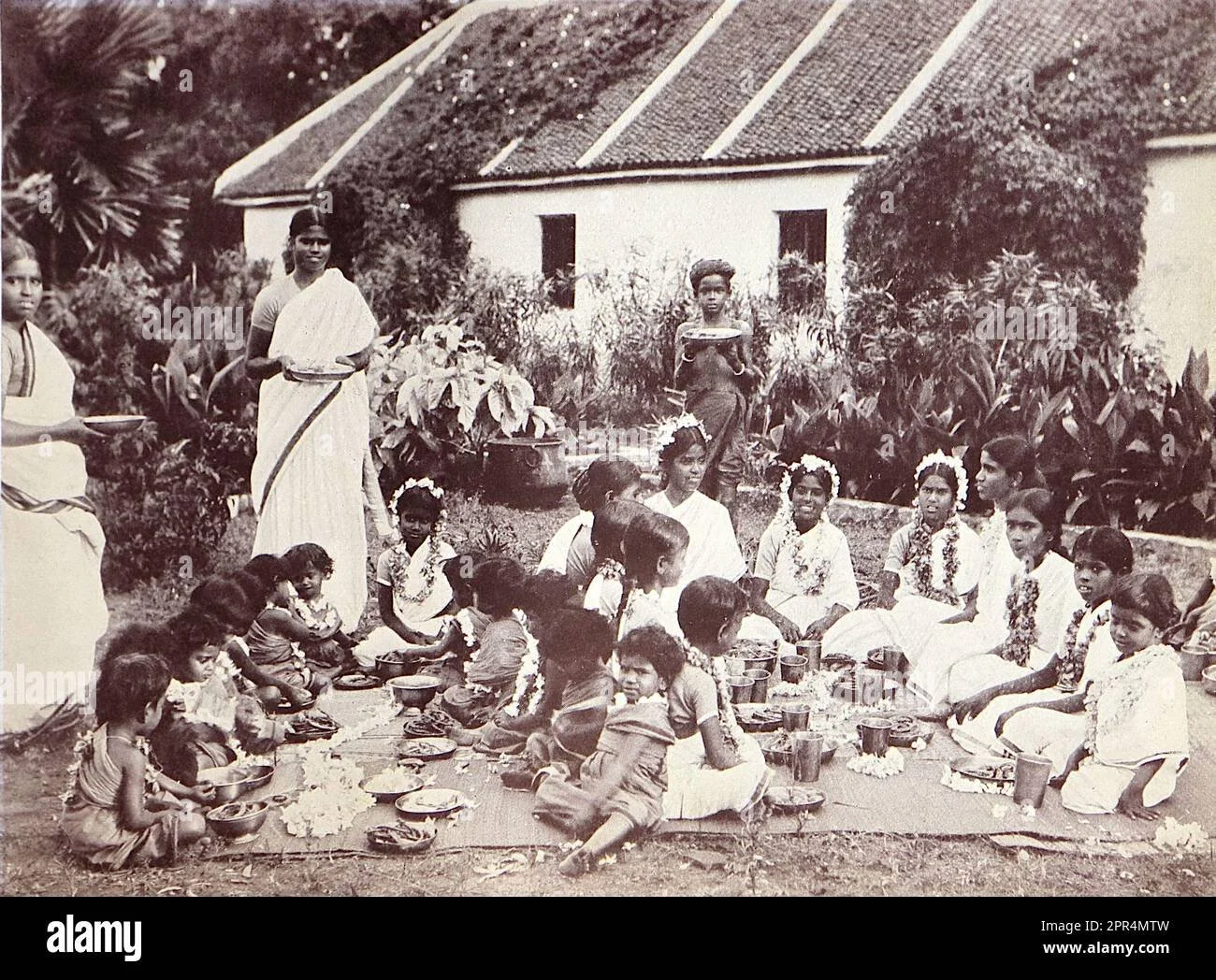
Within six years of her arrival, she founded the Dohnavur Fellowship (which is still in operation today over a century and a quarter later) with the mission to rescue children from the Devadasi system of temple prostitution and provide them with shelter, education and spiritual direction. With the needs of the work continually expanding, her efforts increased to include orphanages and schools as well as a hospital in Tamil Nadu…especially given the fact that many of the rescued children suffered from severe malnourishment, sickness and injuries from abuse and neglect.
The hardship she embraced on account of the work was tremendous.
And the accompanying physical, emotional, and spiritual challenges that followed echo clearly through her poetry, composed amidst cultural opposition, the constant threat of legal prosecution (by both Indian religious leaders as well as British colonial rule ever reluctant to interfere in local customs) together with the struggle of deep isolation from the ever increasing demands of her work.
Then the unforeseen.
Late at night in October of 1931, Ms. Carmichael suffered a debilitating fall in the Dohnavur compound. At the time, a new building was under construction and a deep pit had been dug for work on the foundation. In the darkness, she failed to see the excavation and fell directly into the pit, suffering a broken femur, a shattered ankle and severe trauma to her spine and nerves.
These injuries would never fully heal, leaving her bedridden and in chronic pain for the last twenty years of her life. And though she was never physically restored, a new dimension of insight—shall we say flourishing—began to mark her writing where she viewed her new life of “suffering” as a “threshold to get closer to God.”
We present two such poems below, in which we encounter the twin sides of Love’s flame, finding that it has an experiential power both to destroy and to refine us:
It destroys the spirit of the Age operating in our lives, which subtly works to downgrade the fourth-dimensional weapon “of all prayer” into third-dimensional pleas for our personal comfort and shelter (the “silken self”).
And as she embraced her unsought-after suffering and pain, rather than lamenting over and ultimately resenting what happened, she discovered new dimensions of prayer—prayer that asked, not for physical restoration, but called forth new spiritual fortification into a battle-tested soldier who follows “the Crucified” wherever He leads us and whatever the ‘scars’ and ‘wounds’ He may inflict on us in His pathway.
Below are the two poems with further, brief closing points afterwards.
Flame of God
From prayer that asks that I may be
Sheltered from winds that beat on Thee,
From fearing when I should aspire,
From faltering when I should climb higher,
From silken self, O Captain, free
Thy soldier who would follow Thee.
From subtle love of softening things,
From easy choices, weakenings,
(Not thus are spirits fortified,
Not this way went the Crucified,)
From all that dims Thy Calvary,
O Lamb of God, deliver me.
Give me the love that leads the way,
The faith that nothing can dismay,
The hope no disappointments tire,
The passion that will burn like fire;
Let me not sink to be a clod:
Make me Thy fuel, Flame of God.
Hast thou no scar?
No hidden scar on foot, or side, or hand?
I hear thee sung as mighty in the land,
I hear them hail thy bright ascendant star,
Hast thou no scar?
Hast thou no wound?
Yet I was wounded by the archers, spent,
Leaned Me against a tree to die, and rent
by ravening beasts that compassed Me, I swooned:
Hast thou no wound?
No wound, no scar?
Yet as the Master shall the servant be,
And, pierced are the feet that follow Me;
But thine are whole: can he have followed far
Who has no wound nor scar?
Overview of her writings
Confined to a bed after her injuries and progressively influenced by the Keswick revivalist movement and figures like Hudson Taylor, Carmichael embraced a theology of total surrender to God.
Her poems, as those above, reflect her belief that true Christian discipleship requires rejecting self-indulgence and embracing the “crucified life,” a theme echoed in her book If, where she explores “Calvary love” as selfless and sacrificial.
The phrase critiques the tendency to settle into comfort, which she saw as a barrier to spiritual fortitude and mission. It should be noted here that the environment of suffering that overtook her from her 1931 injuries progressively worked in her to produce 35 works of marked interiority where the life of the Gospel became internalized deeper and deeper into her own person, connecting her to sufferings far beyond her own, limited context.
A note on the cultural and historical context
Carmichael’s era was marked by a surge in missionary zeal, particularly among women, who often faced societal barriers and cultural pressures that would keep them from a deeper discipleship with their suffering Lord and Master. She finally chose, as Moses, to reject the “softening things” offered in the Victorian ideal of domestic comfort, aligning instead with the rugged, sacrificial ethos of pioneering missionaries lilke Adoniram Judson in Burma, Mary Sleeser in the Calabar jungles of Nigeria and Robert Morrison and Hudson Taylor in China.
True Discipleship
When the metanoia of the Gospel penetrated her life then—and our lives now—it begins breaking us out of the false systems of cultural and religious control. Progressively opening our eyes to Reality, the resultant change (metá) in the framework of our understanding (noiéō) then drives us to confront those systems operating not only in our own lives but also in the lives of our family systems and even in the wider society.
In confronting cultural practices like temple prostitution, which Carmichael herself viewed as Satanic oppression, she resolved to resist “easy choices,” despite the opposition, threats and danger that followed.
Why, we might ask?
This was the pathway, again, of “the Crucified.”
At the center of Carmichael’s writing, then, was a focus on the sufferings of Jesus (Phil 2:L1-11, Hebrews 12:1-14, Is 53, etc.), as she learned in the crucible of her own suffering to
“esteem the reproach of Christ greater riches than the treasures in Egypt” (Heb 11:26).
She believed, in short, that Christians must emulate Jesus’ endurance:
“We who follow the Crucified are not here to make a pleasant thing of life; we are called to suffering—
for the sake of a suffering, sinful world.”
The “subtle love of softening things” warns us against insidious temptations—comfort, self-pity, or avoiding conflict—that erode our spiritual resilience.
Carmichael contrasts these with the fortitude required to become a disciple of the One
“despised and rejected, a man of sorrows and well-acquainted with grief.”
Her writings emphasize that spiritual growth comes through hardship, not ease. Her life, example and literary corpus challenge us to pursue personal, vital prayer, prioritizing God’s will over worldly allurements so that our lives resonate with “Calvary love”—a love that sacrifices self for others and in doing so, ushers in divine healing.
Amen.
So may it be!